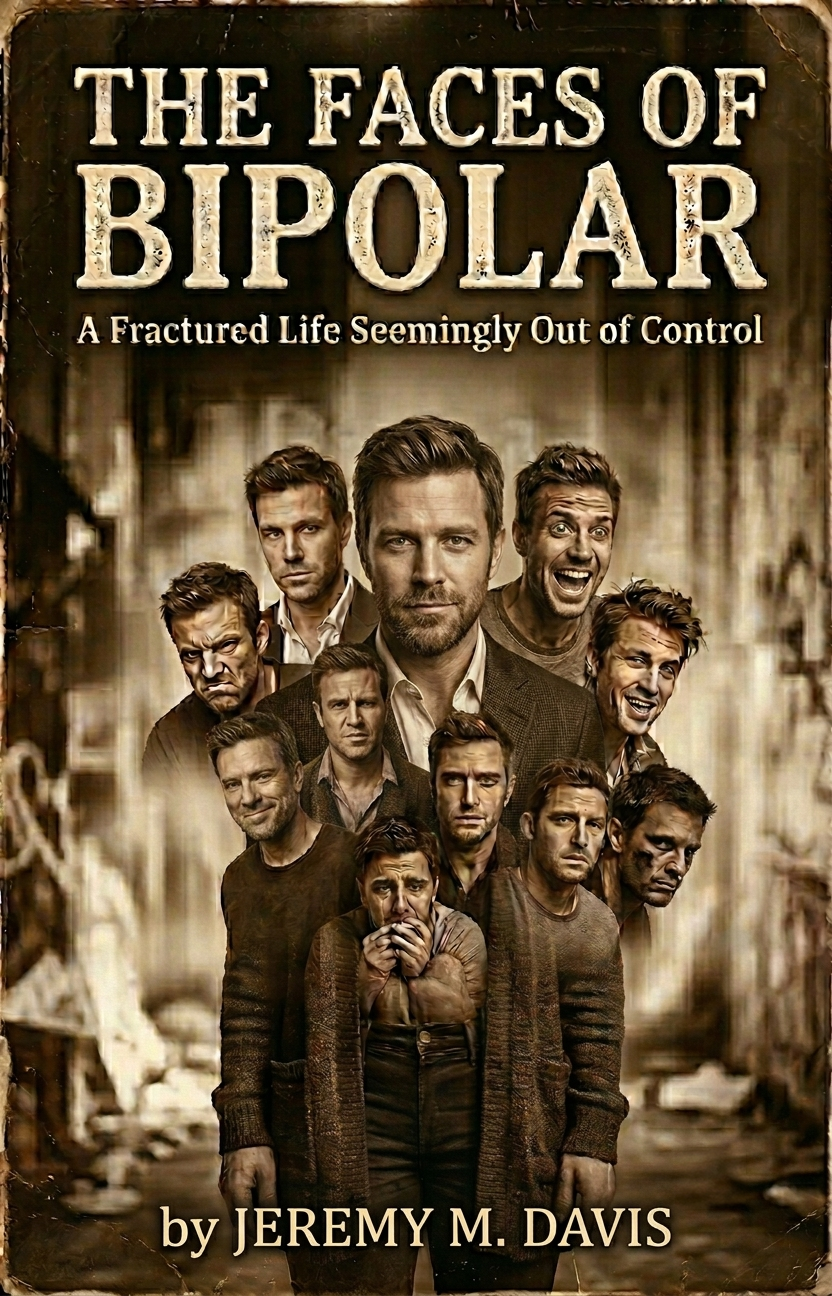
The Faces of Bipolar

A Fractured Life Seemingly Out of Control

In Progress Book Content

Here are the posts related to the exciting book project we are working on. We truly value your thoughts and insights, so please share your feedback on what you have read. Your feedback is not only welcomed but is also essential to us as we continue to develop and improve the project. Your feedback is incredibly important!

Planning & Ideation

Outline

Bipolar is more than a diagnosis; it’s an uninvited roommate shaping your thoughts and reality. This book explores ten personas of bipolar, from the Antagonist who creates conflict to the Encourager that fosters creativity. Each chapter reveals truths about living with this condition, offering insights and strategies for understanding it. You are not alone; together, we can navigate the complexities of bipolar and find hope. Join me on this journey of self-discovery as we confront the voices that influence our lives and learn to reclaim our narrative.

Read More »
Book Content

Before We Begin

Preface: The Voice You Never Asked For

I almost did not write this book. Not because I did not have things to say, but because writing it meant sitting with all of it. The diagnoses. The wreckage. The moments that cannot be taken back. This preface is where I explain why I did it anyway, what I am and am not claiming to be, and why the gap between clinical language and lived experience is the reason this book exists at all.

Read More »

Introduction: Meet Your Uninvited Roommate

Before the personas are introduced, before the science, before any of the tools or the frameworks, this introduction asks you to consider one idea. That bipolar disorder is not just something you have. It is something that takes up space. It moves into your thinking, borrows your voice, uses your memories, and operates in ways that can be very difficult to distinguish from your own judgment. Understanding that distinction is where everything else in this book begins.

Read More »

PART 1

Chapter 1: The Diagnosis That Doesn’t Quite Cover It

The words bipolar disorder arrive with a kind of relief. A name, finally, for something that has been nameless. But then the name sits there, and something feels off about it. Mood disorder. Two poles. As if what you have been living through is a matter of moods. Chapter 1 looks honestly at what the clinical language gets right, what it catastrophically leaves out, and why the gap between the diagnosis and the experience matters more than most people realize.

Read More »

Chapter 2: The Voice on Your Shoulder

Everyone has heard of the little red devil on your shoulder. It is a useful image, except for one thing: in that image, you can see it. You know it is separate from you. You know it is not your own judgment speaking. Chapter 2 examines what happens when the voice does not sit at a visible distance. When it speaks in first person, uses your own memories, and sounds like the clearest, most assured version of yourself you have ever encountered. The terrifying intimacy of that is what this chapter is about.

Read More »

Chapter 3: Why “Just Think Positive” Is The Cruelest Thing You Can Say

Someone meant well when they said it. That is the thing. They cared, and they wanted to help, and they had no idea that what they were offering was roughly equivalent to telling someone with a broken leg to walk it off. Chapter 3 goes into the neuroscience in plain language, not to overwhelm but to validate. What is actually happening in the brain, why willpower is the wrong tool for this particular job, and what the right tools actually are.

Read More »

PART 2

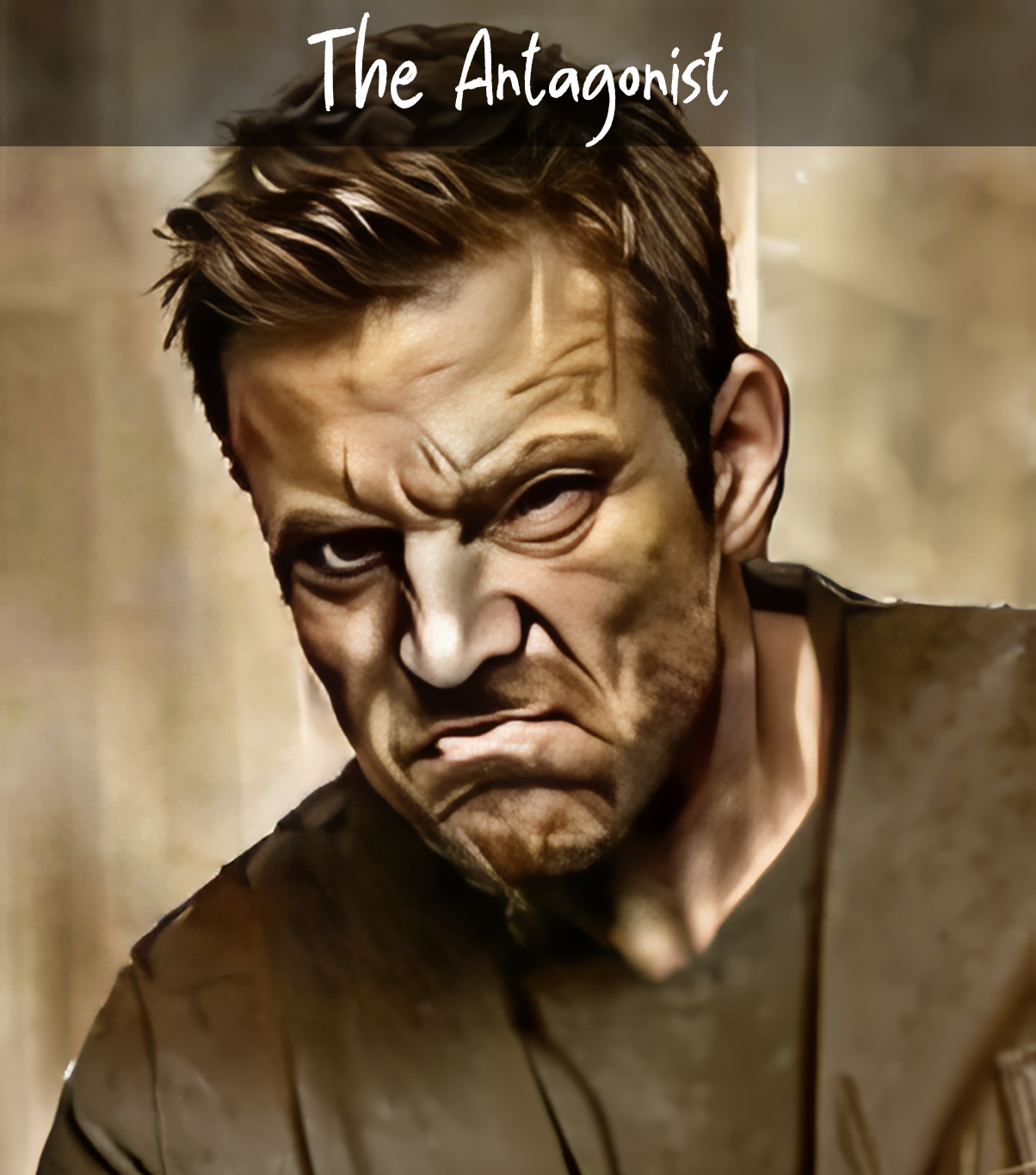
Chapter 4: The Antagonist

Nobody warns you about the anger. The literature talks about the highs and the lows, the cycles, the moods. Nobody mentions that there is a version of this illness that does not feel like a mood at all. That feels like clarity. Like finally seeing things as they actually are, stripped of the politeness and the patience that have been holding you back. Chapter 4 introduces the first persona, the one that is most likely to be invisible from the inside and unmistakable from the outside, and asks what it actually means when rage is a symptom rather than a character flaw.

Read More »

Chapter 5: The Liar

Of all the personas, this one earns its name most completely. Not because it fabricates. Because it selects. It takes real material, real fears, real memories, real grievances, and arranges them into a story that feels airtight and long overdue. Chapter 5 examines the most dangerous face of this illness, the one that does not feel like a symptom at all, the one that feels like finally being honest. And it asks the question that matters most: what do you do when you cannot trust the instrument you would normally use to check your own thinking?

Read More »

Chapter 6: The Critic

Depression, when it is ordinary, makes you sad. The Critic does something different. It makes you deserving of your sadness. It takes the failures and the disappointments, every gap between who you meant to be and who you turned out to be, and presents them without context, without the allowance for imperfection you would extend to anyone else without thinking. Chapter 6 examines the most intimate of the personas, the one that knows you best.

Read More »

Chapter 7: The Sentinel

Every brain has a threat detection system. The Sentinel is what happens when that system decides the threat is everywhere and aimed specifically at you. Not through dramatic delusion or obvious irrationality, but through an exhausting attentiveness that finds patterns in neutral information and cannot be turned off. Chapter 7 looks at the paranoid face of this illness with honesty and without shame, and examines why it tends to be most active precisely when connection is what is most needed.

Read More »

Chapter 8: The Grandiose Champion

This is the one you will miss when it leaves. Every other persona produces a state you want to escape. This one produces a state that feels like finally arriving. The energy, the sharpness, the sense of being chosen and capable and finally operating at your true potential. Chapter 8 examines the most seductive face of bipolar disorder, the one most likely to generate resistance to treatment, and asks the honest question: if it feels this good, how do you know it is the illness talking?

Read More »

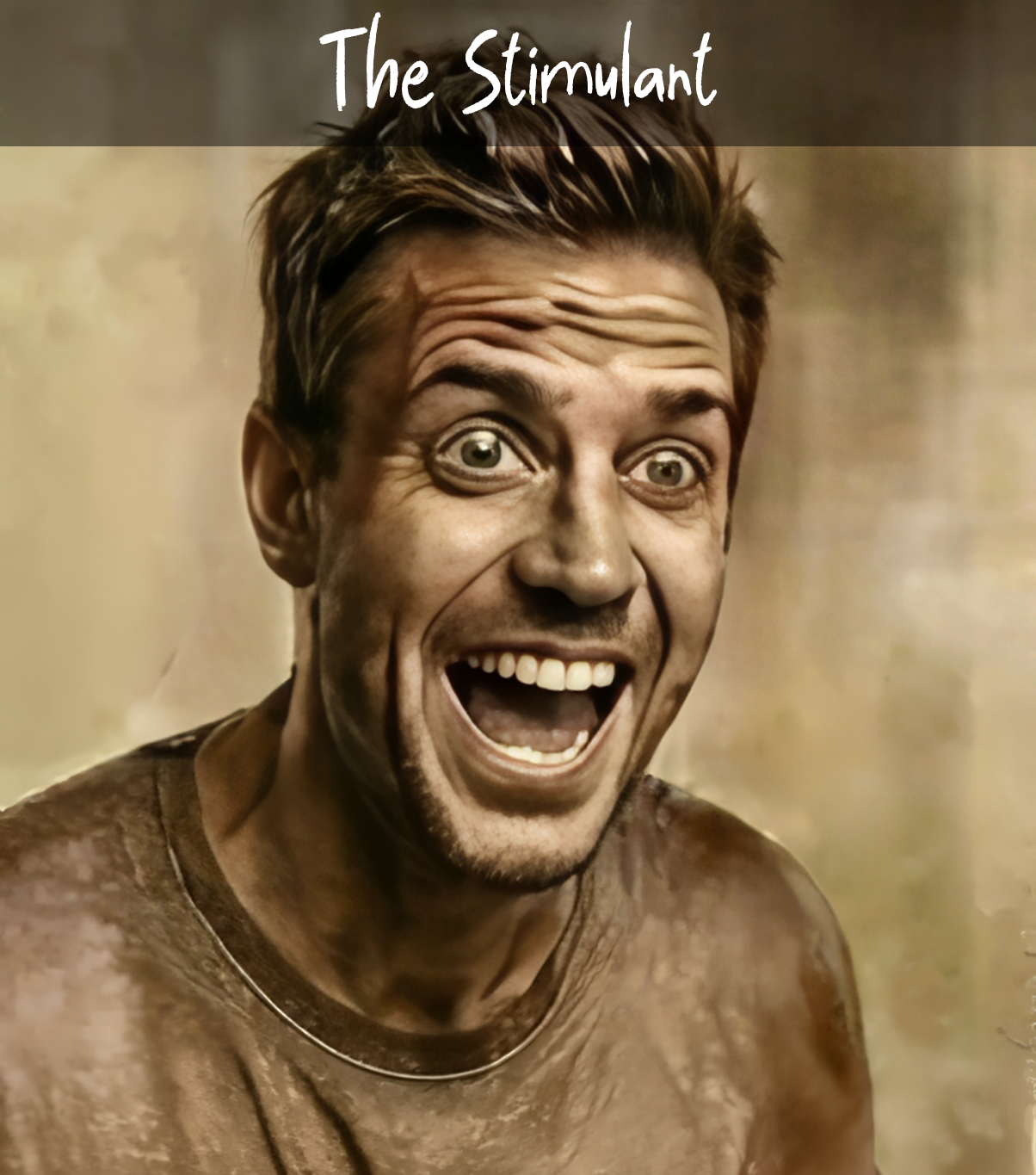
Chapter 9: The Stimulant

People imagine mania as a superpower. As the mind freed from its own constraints, running clean and fast, full of brilliant things. Sometimes, briefly, it is adjacent to that. The Stimulant is what the other side of that looks like. The thoughts that come faster than you can follow. The engine that will not turn off. Underneath both, an exhaustion you cannot reach, because the system is too activated to let you rest into it. Chapter 9 examines the electrical face of this illness and takes an honest look at the gap between what this state promises and what it actually delivers.

Read More »

Chapter 10: The Frat Boy

Every persona in this book does damage. The Frat Boy is the one your future self has to pay for. Not malicious, not plotting, not trying to destroy anything. Just profoundly, neurologically uninterested in consequences. Chapter 10 examines the impulsivity face of bipolar disorder with honesty and without judgment, looks at the specific domains where it tends to operate, and asks why treating the behavior without understanding the mechanism underneath it tends to produce incomplete results at best.

Read More »

Chapter 11: The Encourager

This chapter is different from the ones before it. Every other persona is something to protect yourself from. This one is something to understand before you accidentally discard it. Bipolar disorder takes a great deal. But there is another side of that ledger, one that people with this illness often discover quietly and sometimes with guilt. The empathy built through accumulated suffering. The creativity that appears in certain states. The particular quality of humor that comes from living close to hard things for a long time. Chapter 11 asks what it means to honor those things without letting them become a reason to avoid the treatment that makes them sustainable.

Read More »

Chapter 12: The Scared Child

Underneath all of them, this one waits. Not loud, not forceful, not driving toward anything. The Scared Child is the deepest layer of what this illness does, the place it reaches when everything else has been stripped away. The fear of your own mind. The grief for the time lost, the relationships altered, the versions of yourself that did not survive certain episodes intact. Chapter 12 does not rush past this. It does not reframe it or resolve it or move quickly toward a takeaway. It sits with it, because some things deserve to be acknowledged before they are addressed.

Read More »

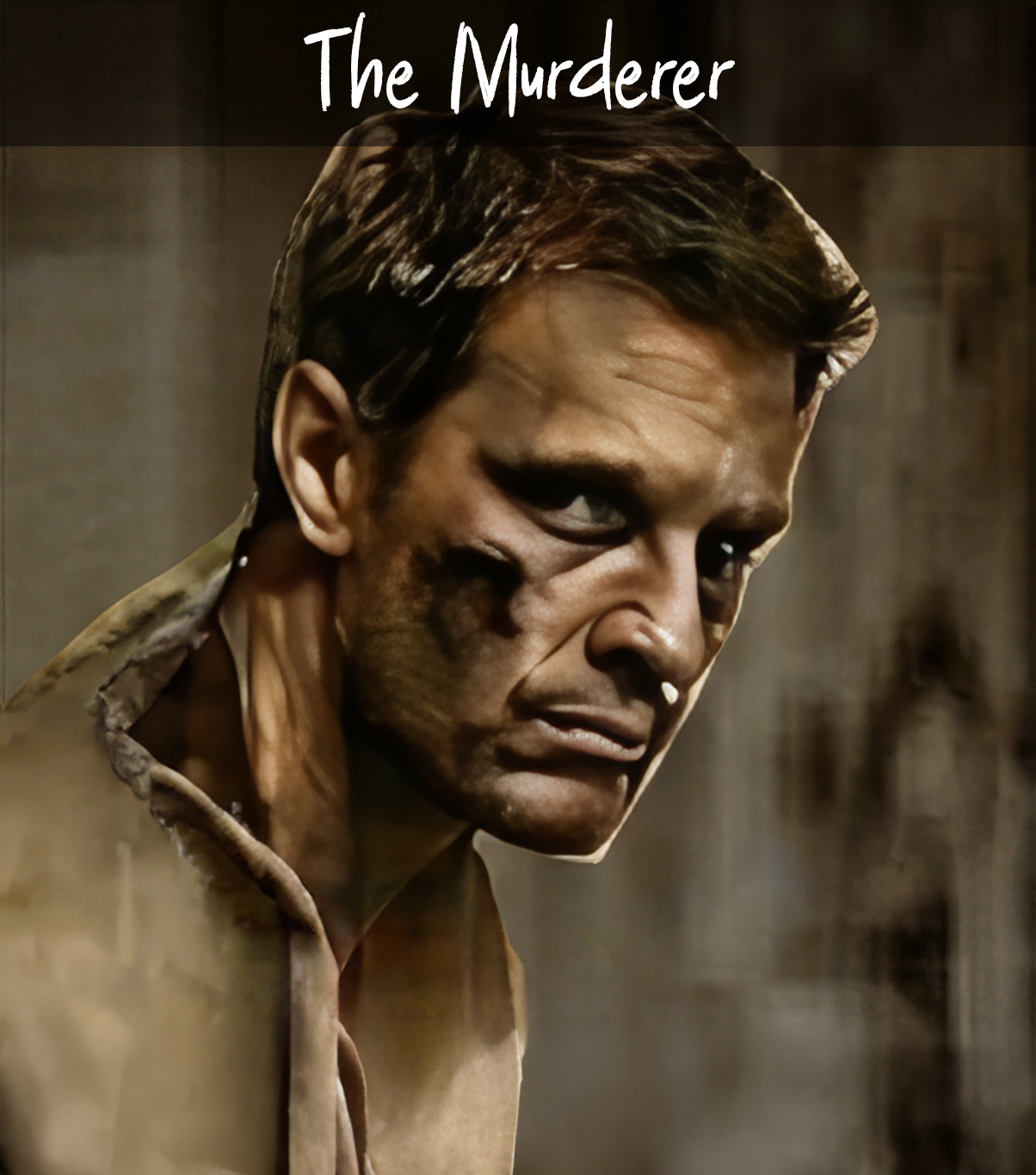
Chapter 13: The Murderer

This is the chapter that almost did not get written, and the one that most needed to be. The silence around suicidal ideation is not protection. It is the condition this particular face of the illness depends on. Chapter 13 addresses the Murderer directly, honestly, and without flinching, because the people who live with this deserve a book that does not look away from the hardest part. It is also, in the end, a chapter about what is true when the Murderer’s case feels most complete, and why the case and the truth are not the same thing.

Read More »

PART 3

Chapter 14: The Cast Was Always Yours

Once you can name the personas, the question becomes: now what? This chapter is about the shift that has to happen before any of the other work can take hold — the shift from becoming the personas to watching them. It is not a cure. It is not a technique you master and then check off a list. It is a practice, built slowly, that begins with one small and radical idea: that the wreckage they leave behind is not proof of who you are.

Read More »

Chapter 15: The People Who Love You Are Confused Too

Bipolar disorder does not only live inside the person who has it. It moves into every relationship they are in and sets up camp there too. This chapter is written for both people in those relationships at once — the one carrying the diagnosis and the one carrying something harder to name. It does not let either side off the hook, and it does not pretend that understanding each other is simple. But it does believe that understanding is possible, and it offers something most books like this one do not: a place where both experiences are treated as real at the same time.

Read More »

Chapter 16: The Treatment Map – No Single Road

There is no single answer. Not one medication, not one therapy, not one morning routine that solves this. What there is, is a landscape — and this chapter is the most honest map of it Jeremy has been able to draw. Medication, therapy, sleep, self-advocacy: each one is examined not as a checklist item but as a living, imperfect, sometimes maddening part of the work. Including the part where the illness itself tries to convince you the work is not worth doing.

Read More »

PART 4

Chapter 17: Integration – You Are Not Your Diagnosis, But It Is Part of You

For years, I tried to keep bipolar disorder at arm’s length – to be the person who had the illness rather than the person the illness had shaped. This chapter is about what happened when that strategy stopped working, and what I found on the other side of it. Not acceptance in the passive sense. Something harder and more honest than that. A way of building a life that accounts for the terrain of my actual brain, rather than the brain I used to wish I had.

Read More »

Chapter 18: The Letter I Wish I’d Received

This is the last chapter, and it is written directly to you. Not to the general reader, not to whoever might pick this up out of curiosity – to the person who is in the middle of it right now. The one who is exhausted in a way that sleep does not fix. The one who has been told it gets better and has stopped quite believing that. Jeremy does not write from a mountaintop. He writes from somewhere in the middle of his own ongoing story, which is exactly why this letter is worth reading. It does not promise easy. It promises something more useful than that.

Read More »

APPENDIX

About the Author

Jeremy M. Davis is a software engineer turned first-time author, and he writes the way he built software: methodically, honestly, and with zero tolerance for code that lies about what it actually does. The Faces of Bipolar is his debut book.

Read More »
Scroll to Top